Gaming has always been about escape, connection, and the deeply human joy of play. But for millions of people around the world, that joy has come with an invisible barrier. The controller does not fit their hands. The text is too small to read. The audio cues are the only way to understand what is happening, and they cannot hear them. The game demands reaction speeds their bodies cannot produce. These are not edge cases or rare exceptions. They are the daily reality of players with disabilities who love games just as much as anyone else and have historically been told, not in words but in design choices, that games were not really made for them. Accessible gaming is the movement, the philosophy, and the growing body of design practice that is changing that reality. It is one of the most important conversations happening in the games industry right now, and understanding it matters far beyond the world of gaming itself.
Defining Accessible Gaming and What It Actually Means
Accessible gaming refers to the design of video games, hardware, and gaming ecosystems in ways that allow people with a wide range of disabilities and impairments to participate fully and meaningfully. This includes players with physical disabilities that affect motor control, visual impairments ranging from low vision to complete blindness, hearing impairments, cognitive and learning differences, and mental health conditions that affect how people engage with challenging or stressful content.
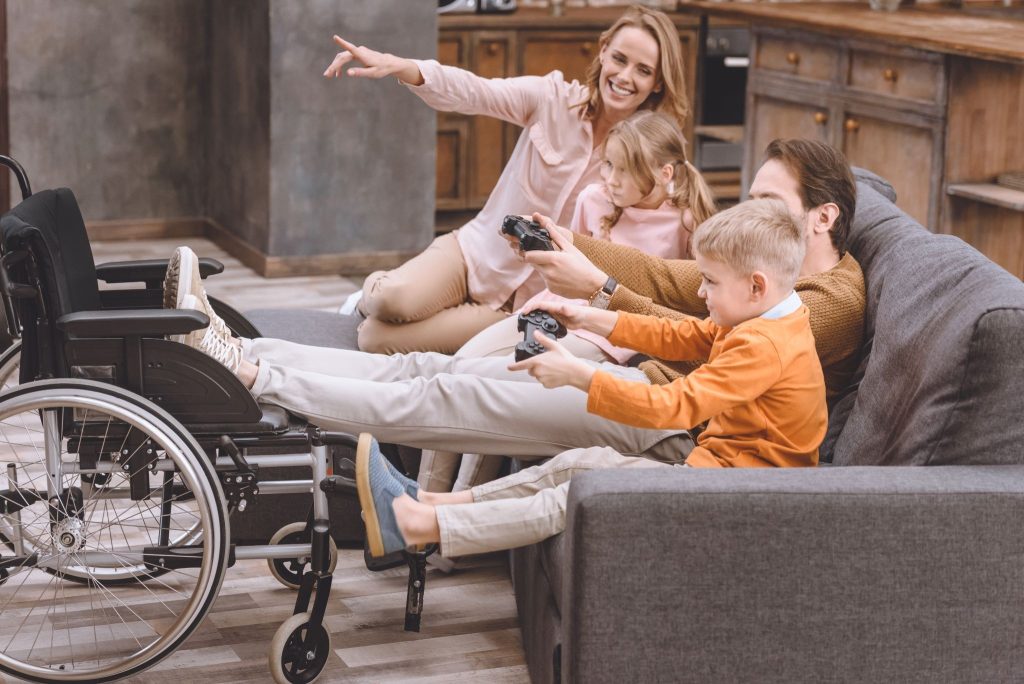
The definition sounds technical, but the reality behind it is intensely personal. Accessible gaming is the difference between a father with limited hand mobility being able to play a game with his children and being locked out of that shared experience entirely. It is the difference between a blind player being able to navigate a game world independently and needing a sighted person to play for them. It is the difference between a player with epilepsy being able to enjoy a visually rich game safely and having to avoid entire genres because no one thought to include a photosensitivity warning. These differences are not trivial. They touch on dignity, belonging, and the fundamental human desire to participate in culture on your own terms.
Accessible gaming is not a single feature or a checkbox on a design document. It is a comprehensive approach to development that considers the full range of human bodies, minds, and experiences from the earliest stages of design rather than as an afterthought added after everything else is complete. This distinction between accessibility as a design philosophy and accessibility as a late-stage patch is one of the most important in the field, and it is where the gap between the best and the worst practices in the industry is widest.
The Spectrum of Disability That Accessible Gaming Addresses
One of the most important things to understand about accessible gaming is the sheer breadth of the disabilities and impairments it addresses. Disability is not a monolithic category. It encompasses an enormous range of experiences, needs, and functional differences, and effective accessible gaming design must account for that range rather than designing for a single imagined disabled user.
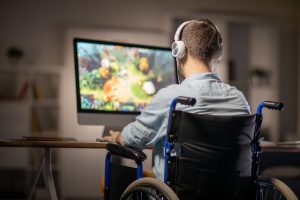
Motor disabilities represent one of the largest categories in accessible gaming. These range from conditions like cerebral palsy and muscular dystrophy that affect control and strength across the whole body, to more localized impairments like the loss of use of a single hand, to tremor conditions like Parkinson’s disease that affect fine motor precision. Players with motor disabilities may need alternative control schemes, adjustable button mapping, the ability to slow game speed, single-switch input options, or specialized hardware. The range of solutions required is as wide as the range of conditions themselves.
Visual impairments require a different set of design responses. Low vision players may need larger text, higher contrast modes, and the ability to adjust UI scale significantly beyond what most games currently offer. Blind players require fully functional audio description systems, sonification of visual information, and screen reader compatibility for menus and text. Color blindness, which affects approximately eight percent of men and half a percent of women of Northern European descent, requires color-blind modes that communicate information through shape, pattern, or text rather than color alone. Each of these needs requires specific design investment, and none of them is served adequately by the others.
Hearing impairments in gaming context require comprehensive subtitle systems that go far beyond simple dialogue captions. They require visual representations of audio cues that carry gameplay-critical information, such as enemy footsteps, incoming attacks, or environmental warnings. They require the ability to customize subtitle size, color, and background contrast. And they require the recognition that sound design in many games carries narrative and emotional information that deaf and hard-of-hearing players deserve access to through equivalent visual means.
Why Accessible Gaming Matters Beyond the Gaming World
The importance of accessible gaming extends far beyond the games industry and far beyond the experience of individual players. It is connected to broader questions about inclusion, equity, and the right of disabled people to participate fully in cultural and social life. When gaming is designed accessibly, it sends a message that resonates well beyond the screen: that disabled people are valued members of the community, that their presence is anticipated and welcomed, and that their experiences matter enough to invest in.
Gaming is not a trivial cultural form. It is one of the largest entertainment industries in the world, generating more revenue than film and music combined. It is where millions of people form friendships, process emotions, develop skills, and experience stories. When disabled people are excluded from that space by design failures, the exclusion is not just inconvenient. It is a denial of participation in something that has become a central part of contemporary cultural life. The stakes of accessible gaming are therefore the stakes of cultural inclusion itself.
The Size of the Disabled Gaming Community
The scale of the accessible gaming opportunity is frequently underestimated by an industry that has historically treated disability as a niche concern. According to the World Health Organization, approximately 1.3 billion people, around 16 percent of the global population, live with some form of disability. Even within the narrower context of gaming demographics, the numbers are significant. A 2019 survey by the AbleGamers charity found that approximately 33 million Americans with disabilities play video games. These are not a marginal audience. They are a massive one, and they are an audience that has been systematically underserved.
Beyond the numbers, it is worth noting that accessibility features benefit a far wider population than those with formal disability classifications. Subtitles were designed for deaf and hard-of-hearing players, but research consistently shows that a large proportion of players who use subtitles have no hearing impairment. They use subtitles in noisy environments, when playing late at night without disturbing others, or simply because they find them helpful for following dialogue clearly. Adjustable difficulty benefits players with motor impairments, but it also benefits older players whose reaction times have changed with age, casual players who do not have the time to grind through high-difficulty content, and players who are new to a particular genre. This phenomenon, where accessibility features improve the experience for the broadest possible audience, is sometimes called the curb cut effect, named after the observation that wheelchair ramps benefit not just wheelchair users but parents with strollers, delivery workers with carts, and cyclists as well.
Accessible Gaming as a Social Justice Issue
Accessible gaming is inseparable from the broader social justice context of disability rights. The movement for disability rights is built on the principle that the barriers disabled people face are not inherent to their disabilities but are constructed by environments, systems, and cultures that were designed without them in mind. This is called the social model of disability, and it applies directly to gaming. A player who cannot navigate a game because it requires two fully functioning hands does not have a gaming problem. They have a design problem. The disability is in the design, not in the player.
The State of Accessible Gaming in the Industry Today
The gaming industry’s relationship with accessibility has changed dramatically in recent years, though it remains uneven and incomplete. A decade ago, accessibility features were rare enough to be remarkable. Today, they are expected by a growing portion of the player base, discussed in mainstream reviews, and celebrated in dedicated awards like the Game Awards’ Innovation in Accessibility category. This shift represents genuine progress, but it has not been uniform across the industry, and significant gaps remain.
Some developers and publishers have emerged as genuine leaders in accessible gaming. Naughty Dog’s “The Last of Us Part II,” released in 2020, set a new standard for the industry with over 60 accessibility features covering motor, visual, auditory, and cognitive needs. The game could be completed using a single button. It included full audio descriptions of cutscenes. It featured comprehensive subtitle customization and a color-blind mode. Its release generated an enormous conversation about what accessible gaming could look like when it was treated as a genuine design priority rather than an afterthought, and it demonstrated definitively that high accessibility and high production quality are not in tension with each other.
Xbox has emerged as the most consistently accessibility-focused platform holder in the industry. The Xbox Adaptive Controller, released in 2018, was a landmark product: a large, customizable controller designed specifically to work with a wide range of alternative input devices and to serve players whose physical needs cannot be met by standard controller designs. Microsoft’s broader gaming accessibility commitments, including accessibility features built into the Xbox platform itself and resources like the Xbox Accessibility Guidelines for developers, have positioned the company as a leader in the space. Their approach has demonstrated that accessible gaming is not just ethically important but commercially intelligent.
Where the Industry Still Falls Short
Despite this progress, the gaming industry still falls short of genuine accessibility in numerous and significant ways. Smaller independent developers, who lack the resources of major studios, often ship games with minimal accessibility features not out of indifference but out of genuine capacity constraints. Accessibility design requires time, expertise, and testing with disabled players, and all of these cost money that small studios may not have. The industry has not yet developed adequate systems for supporting smaller developers in meeting accessibility standards, and the result is a significant portion of the gaming market that remains inaccessible by default.
Even among larger studios, accessibility is often treated as a feature set added late in development rather than a design philosophy integrated from the beginning. This approach produces accessibility features that are incomplete, inconsistently implemented, or poorly integrated with the core game experience. Truly accessible gaming design requires disabled players to be involved in the design process from its earliest stages, not just as testers checking a nearly finished product but as consultants and collaborators whose expertise shapes foundational design decisions.
Hardware Innovation and the Future of Accessible Gaming
Accessible gaming is not just a software design challenge. It is a hardware challenge that requires innovative thinking about physical controllers, input devices, and the ways human bodies interact with gaming technology. The standard game controller, refined over decades for the majority of players, represents a significant barrier for players whose bodies do not conform to the physical assumptions built into its design.
The field of accessible gaming hardware has seen remarkable innovation from both major companies and small specialized organizations. The AbleGamers charity’s Warfighter Engaged program creates custom controllers for veterans with disabilities. SpecialEffect, a UK-based charity, provides customized technology solutions for individual disabled players, including eye-gaze systems that allow players with no functional motor control to play games by looking at the screen. These organizations are doing extraordinary work, but their reach is limited by their capacity and resources, and the solutions they provide are necessarily bespoke rather than scalable.
Emerging Technologies and Their Accessibility Potential
Several emerging technologies hold significant promise for the future of accessible gaming. Eye-tracking technology, already available in some gaming monitors and beginning to appear in consumer hardware, offers a compelling alternative input method for players with limited motor control. Voice control has advanced dramatically with improvements in speech recognition technology, and several accessibility advocates have demonstrated that modern voice control systems are capable of handling complex game inputs with sufficient speed and accuracy for real gameplay.
Final Thought
Accessible gaming is not a charitable concession to a minority audience. It is the recognition that games are for everyone and that design choices have always determined who gets to participate in one of the most vibrant and meaningful cultural forms of our time. Every player locked out by an inaccessible design is a person denied joy, connection, and belonging. Every accessibility feature added thoughtfully and early is an invitation extended to someone who might otherwise never have received one. The gaming industry is getting better at extending those invitations, slowly and unevenly but genuinely. And the players who have waited longest for them deserve to have their patience met with something more than minimum effort. They deserve games that were made thinking of them from the very beginning, because that is what it means to truly believe that games are for everyone.